
Fort Bend Juvenile Release Rules
Fort Bend County Juvenile Detention belongs to the county Juvenile Probation system and sits outside the adult-inmate focus. Its custody, court, and supervision records are not an adult jail roster. Juvenile information can be confidential under Texas law, and public-information exceptions may require withholding identifying, medical, victim, or court material. A lack of public data is not evidence that the child was never detained or has been released.
Release may be ordered into Pre-Adjudication Supervision, often shortened to PAS. Pre-adjudication means the case has not reached a final adjudication. Supervision in the community can include court-set terms and contact with Juvenile Probation. It should not be called adult probation, parole, or a state-prison discharge.
| System | Who it covers | Correct route |
|---|---|---|
| Juvenile detention | Youth in the county juvenile process | Juvenile court or probation |
| FBCSO adult jail | Adults booked into county custody | Sheriff inquiry and records |
| TDCJ prison | State prisoners | TDCJ offender records |
Confirm Fort Bend Juvenile Release
There is no research-supported public released-juvenile name feed. A parent, guardian, lawyer, or other authorized person should use the assigned case contacts. Start with the court paperwork and the child’s Juvenile Probation contact. Ask for the current custody or supervision posture without requesting more private material than needed.
- Use the child’s full legal name and case number in a private communication with the authorized office.
- Review the latest juvenile court order for detention, release, PAS, placement, and return dates.
- Contact the assigned Juvenile Probation officer or attorney to confirm whether physical detention ended.
- Ask where the child was released or transferred and which terms now apply.
Do not search the adult jail inquiry for a juvenile or treat its silence as a release finding.
Pre-Adjudication Release Supervision
The county’s Pre-Adjudication Supervision page is the official source for this local release layer. PAS permits court-directed community supervision before the juvenile case is decided. It is not proof that the allegations were sustained, and it does not mean the case closed.
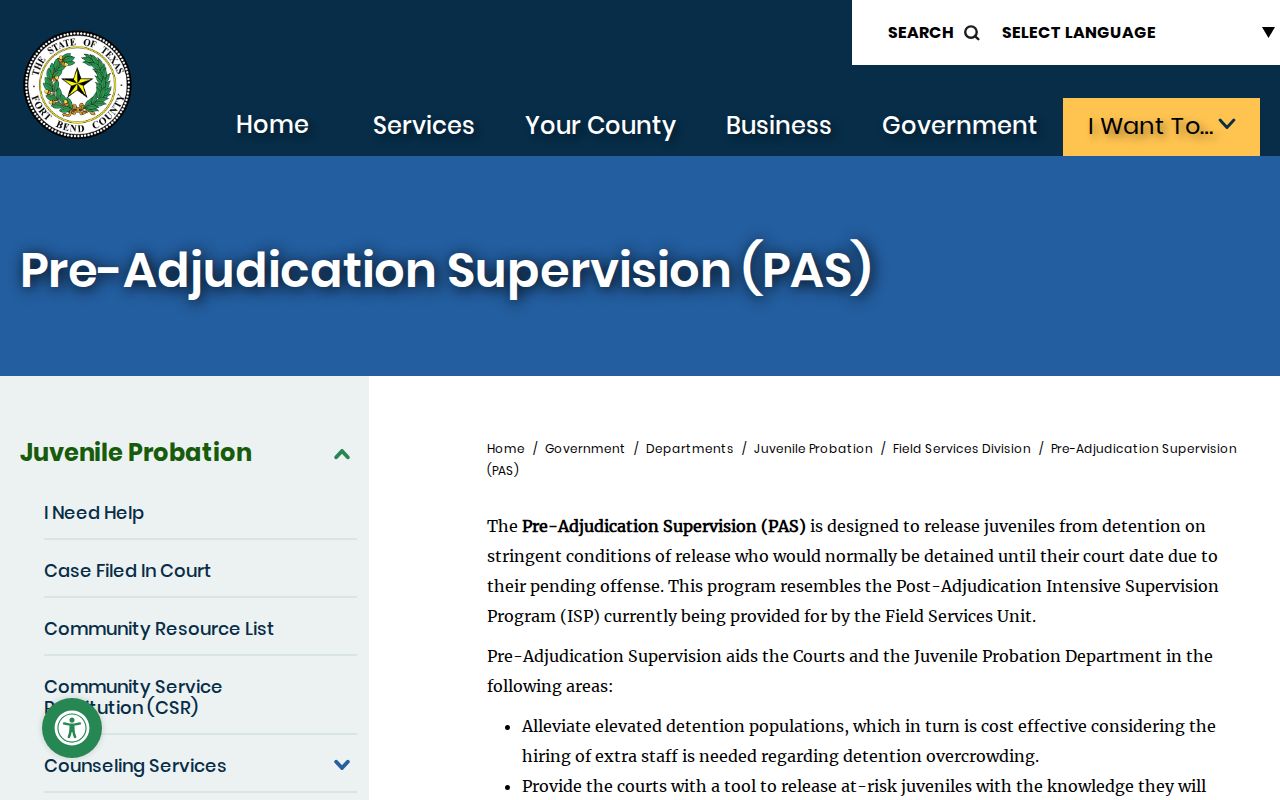
The official county material places release decisions inside the juvenile court and probation process, not a public adult custody search.
Conditions and service referrals depend on the order and case. The assigned officer is the best source for reporting instructions and the approved home or placement. A later modification can change those terms without creating a public release listing.
Fort Bend Juvenile Records
A records request cannot override juvenile confidentiality. Texas Government Code Chapter 552 governs county public-information requests, but other law can make juvenile records confidential or limit who may inspect them. The county may redact identifying and sensitive details, withhold a record, or direct an authorized party to a court process.
Ask for an existing, specific record and identify the requester’s relationship to the child. Counsel and guardians should follow the court’s access process. A general member of the public should not expect the adult release fields, booking photograph, or open roster entry used for FBCSO adult detainees.
- Release
- Physical detention ends under an authorized decision.
- Transfer
- The child moves to another approved placement and may remain in custody.
- Pre-adjudication
- The case is pending and has not reached a final juvenile finding.
- Supervision
- Court-ordered monitoring in the community.
Fort Bend Juvenile Contact
Use the official Juvenile Probation channel for program routing. Case-specific facts should be shared only through a secure channel with staff authorized to discuss them.
Fort Bend County Juvenile ProbationFort Bend County, Texas
Official department and field-services contacts
Case access subject to juvenile confidentiality
The Fort Bend Juvenile Probation department provides the current county contact route. The research does not support publishing a detention street address, direct release phone, hours, or capacity here, so none is inferred.
Fort Bend Juvenile Court Orders
The written court order is the strongest source for the terms of a juvenile departure. It can identify whether the child returns to a parent or guardian, enters a placement, or begins community supervision. A transport to another secure or residential setting is not a community release merely because the child left county detention. Confirm both the physical destination and the legal status.
Juvenile terms matter. Adjudication is the process used to decide whether alleged conduct is established. It is not an adult criminal conviction. Disposition is the later order setting consequences or services after adjudication. Pre-adjudication supervision occurs earlier, while the case remains pending. Correct terms prevent adult jail, parole, and prison rules from being imported into a youth case.
Families should keep the latest signed order, the assigned officer’s contact details, and the next court date together. If instructions conflict, the attorney or juvenile court should clarify which order controls. A public search cannot resolve that conflict.
Confidential Juvenile Release Data
Texas public-information law does not create a universal right to inspect a child’s detention file. Juvenile records may include protected identity, health, family, victim, school, biometric, and service information. Even an authorized requester may receive only the part allowed by law or court order. Redaction is not evidence that the office lacks the complete record.
A narrow request can state the event and the requester’s authority. An authorized person may ask for the order or notice governing the child’s release date, destination, and supervision contact. The office may require identity proof or route access through the clerk or counsel. A child’s name and case facts should not be published merely to seek general help.
The adult FBCSO Records Division creates packets for the adult jail. It is not the default custodian for Juvenile Probation cases. Texas VINE and the TDCJ locator are also adult custody tools and should not be used to infer a juvenile result.
After Fort Bend Juvenile Release
Physical release does not erase the juvenile case or end every court duty. The child may have reporting terms, services, school requirements, placement limits, or a future hearing. Only the current order and authorized case staff can define those obligations.
Adult post-release pages should not be used to fill gaps in a juvenile case. The Fort Bend County adult release search applies to adult county, state, federal, and immigration channels, while juvenile access remains a separate confidential process.
Note: Protect the child’s identity and confirm status through an authorized juvenile contact rather than a public adult record tool.