
Fort Bend 72-Hour Feed Is Absent
FBCSO offers a current-custody inquiry, not a release archive. The official Jail Public Information Inquiry searches a full or partial first name, last name, or both. It supplies no three-day date range, prior-booking view, or release filter. Consequently, it cannot produce a verified list of everyone who departed during a weekend or any other 72-hour span.
A person can leave the Fort Bend County Detention Facility for the street, TDCJ, or another agency. The Bonding Office uses that three-part distinction when it processes release documents. Movement to a state prison or another jail ends the FBCSO stay without ending custody. A useful three-day review therefore asks both when the local booking ended and where the person went.
Check Fort Bend Three-Day Releases
A three-day reconstruction works best when the searcher defines the start and end of the period before contacting the county. That is especially useful across a Friday-to-Monday span. The live roster can identify people still held now, but it cannot show who appeared and disappeared during the period.
- Write down the exact 72-hour interval, including the start and end date and time.
- Search the current FBCSO inquiry for each known name and retain the Jail ID if shown.
- Ask Bonding or Detention staff whether a vanished record ended in street release, TDCJ transfer, or transfer to another agency.
- Request booking and release records for the defined interval when a documentary list or individual proof is needed.
- Check VINE for county custody events, TDCJ for a state transfer, and the proper court clerk for the authority behind release.
For a same-day check, the Fort Bend 24-hour release process narrows this workflow to today. Both pages use the same official sources because neither release feed exists, but the three-day method places more weight on date boundaries and weekend court activity.
Fort Bend 72-Hour Record Fields
There are no public 72-hour feed columns to quote. A public-information request can instead identify the administrative fields that would make a three-day result meaningful. FBCSO does not promise that every requested field exists or will be released, so describe the subject, booking, and time range with care.
| Requested field | Reason for the three-day review |
|---|---|
| Name and Jail ID | Separates people with similar names. |
| Booking number | Links the departure to one custody event. |
| Book-in and book-out times | Tests whether the stay ended inside the 72-hour window. |
| Release destination | Distinguishes street release from continued custody. |
| Releasing authority | Identifies the bond or court document staff relied upon. |
| Charge disposition | Connects the jail record with the relevant case outcome. |
The public current record shows Name, Jail ID, age, race, sex, and charge-table information. It omits release date, release reason, prior history, and projected release. That mismatch is why copying current results at the end of a weekend does not reproduce the people who left earlier in the weekend.
Weekend Fort Bend Release Timing
A 72-hour span is useful because bonds, dismissals, sentence completion, and agency transfers do not all align with a weekday office schedule. Yet Fort Bend has no published weekend release calendar or guaranteed public update cadence. Court orders and bonding documents should be read as the authority for a specific person, while the jail release record supplies the actual custody departure.
The county’s roughly four-hour warning applies to the interval after booking before the Bonding Office may be able to confirm information. It is not a promise that the public roster refreshes every four hours, and it should not be used to estimate a release posting time. A short booking that starts and ends inside the three-day period may never become a durable public result.
Holiday periods raise the same issue. Define the dates, allow for administrative lag, and confirm after offices reopen when no urgent custody issue exists. A court docket can show an order, but the order alone does not prove the exact moment the jail carried it out.
Current-Only Fort Bend Data Quirk
The county labels the inquiry “in custody.” Its name-only design has no release window or historical archive. That is a deliberate scope limit, not proof that no releases occurred. The warning about booking confirmation also cannot be repurposed into a release-feed cadence. These two facts define the central Fort Bend County 72-hour release problem: the public interface answers who is held now, while the research question concerns who left during a past interval.
Use two points in time with caution. A person visible on Friday and absent Monday may have been released to the street, sent to TDCJ, transferred on a warrant, or removed from view for another data reason. Only an agency record or confirmed receiving-system result resolves that ambiguity.
Note: Save the exact query time because current-custody results can change after the search.
Fort Bend App Is Not History
The official “Fort Bend County Sheriff, TX” app provides alerts, resources, reporting, and access to current Jail Inquiry information. Its public description does not advertise a 72-hour release archive. The app can make a current name check more convenient, but it does not preserve everyone who appeared during the prior three days.
The official app listing illustrates the mobile access point.
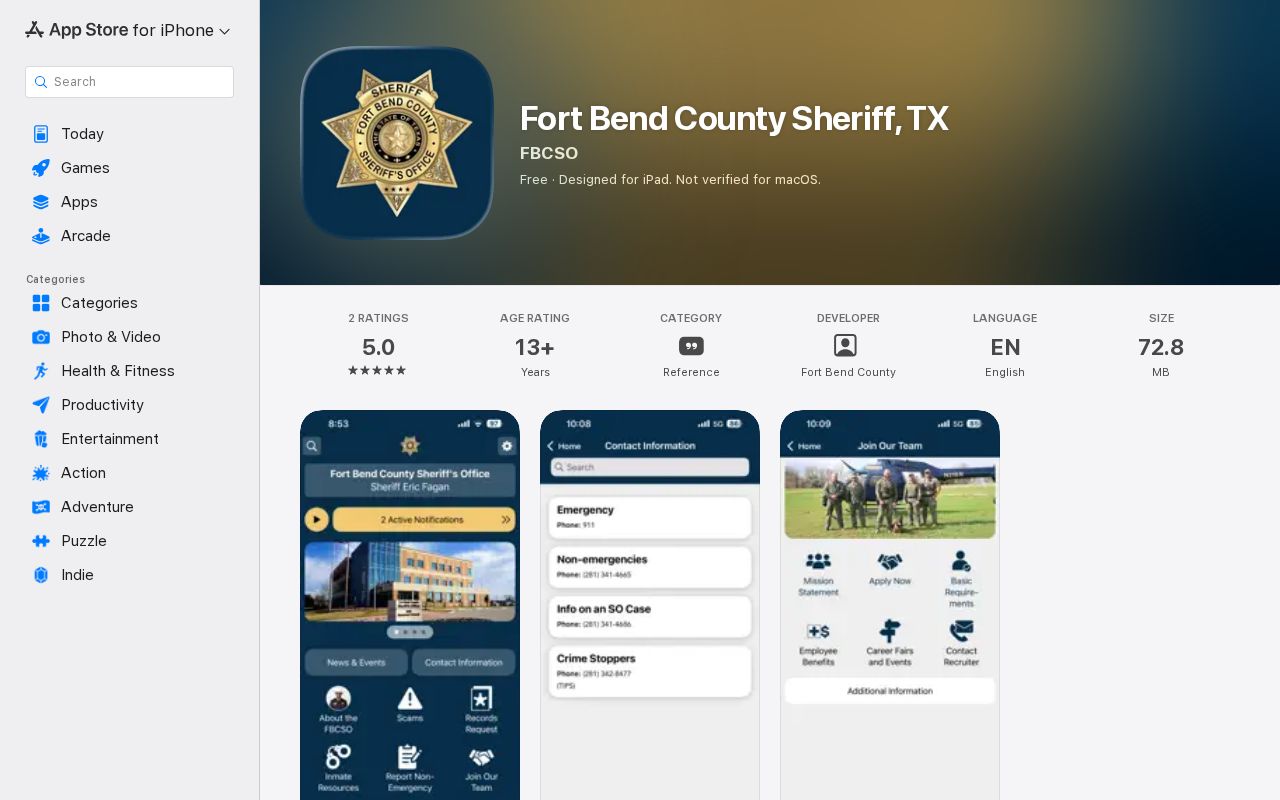
The capture documents an official sheriff channel while also showing why its existence should not be mistaken for a historical release feed.
Fort Bend Bond and Court Records
Three-day research often benefits from reading the release record beside the court case. Cash, surety, and personal bonds can support street release while the case remains open. Dismissal orders, judgments, sentences, and commitments may explain other departures. County Clerk systems cover misdemeanor matters, while District Clerk Public Access covers felony matters. A 2026 Fort Bend transfer of certain misdemeanor filings between clerk systems makes it wise to check the county’s current routing instructions rather than assuming one portal contains every older case.
The Fort Bend Bail Bond Board publishes official bonding-company information, but the presence of a company or bond does not supply the actual jail release timestamp. That fact remains with the detention record.
The county bond resource appears in this official capture.
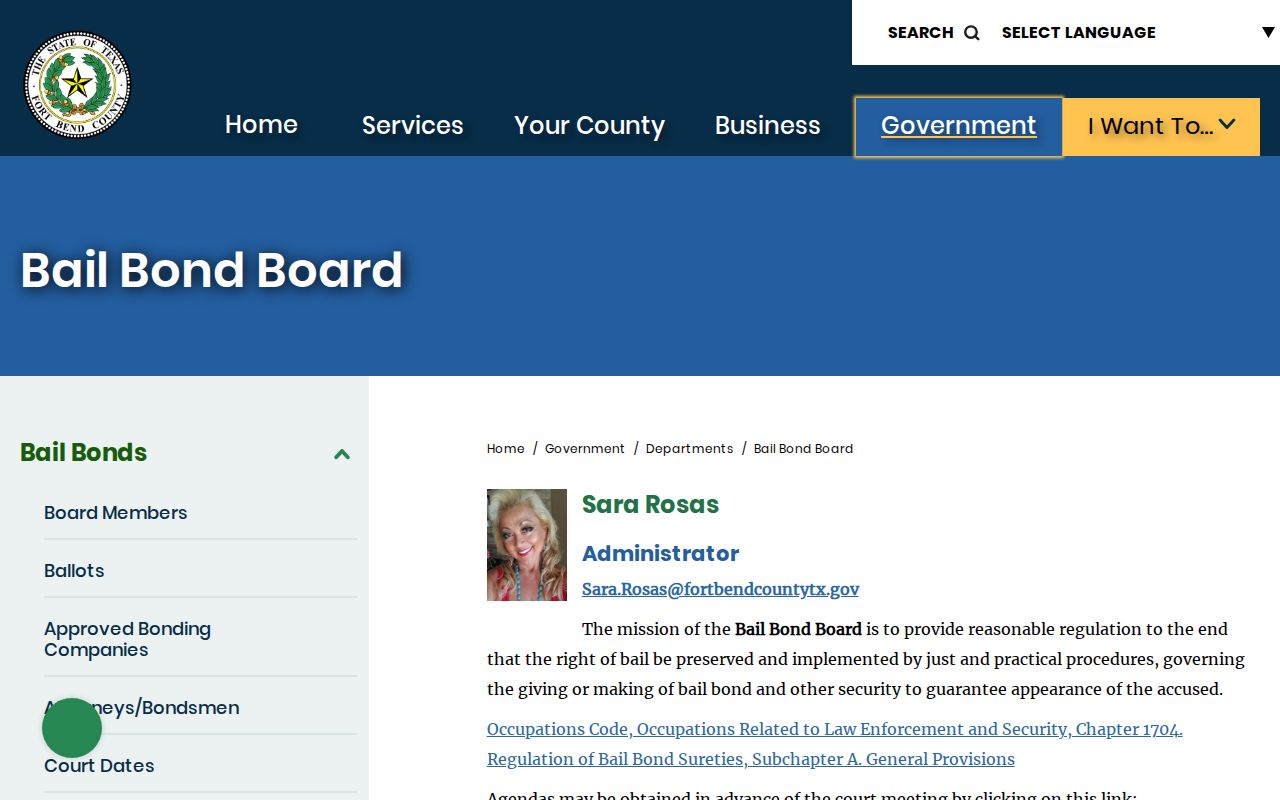
The image supports the bond route while preserving the difference between an approved bond source and proof that custody ended.
Fort Bend Release Fallback Chain
When the current inquiry cannot answer the three-day question, a focused records request is the durable county route. FBCSO accepts public-information requests through its stated email, mail, in-person, fax, and mobile-app channels. Ask for a narrow period and named fields. Broad requests can create avoidable cost and delay. Texas Public Information Act procedures govern access, but confidentiality, juvenile rules, sealing, and expunction can limit what is released.
VINE is useful for county custody notifications, not as the sheriff’s certified record. TDCJ’s offender search applies after a state-prison transfer. BOP has a national locator for federal custody, while ICE’s locator concerns immigration detention and has visibility limits. A missing result in any one system is not enough to prove community release.
- Current custody
- FBCSO reports the person held now.
- Street release
- The person leaves custody for the community.
- Transfer
- Another agency assumes custody.
- Discharge
- A sentence or supervision obligation reaches its legal end.
For one known person, the full Fort Bend released inmate search brings the jail, court, state, federal, and records paths together.